
Let our experienced team of Physiotherapists help you enhance your rehabilitation and maximise your wellness with Clinical Pilates.




Are you waking up in the morning in pain? Do you want to live a pain free life? At a2z Health Group, we provide Clinical Pilates, Physiotherapy and a range of other treatments to aid your recovery & wellness.
We believe in a holistic and person-centred focus when it comes to assisting you and your loved ones in recovery and creating a state of ongoing wellness.
Our team of NDIS-approved Physiotherapists and Pilates Instructors utilises evidence based paediatric practice in combination with years of experience.
Our clinic is designed to meet various and diverse needs, including a purpose designed pilates room and gym.
Today, Pilates has become a major tool used by physiotherapists to treat shoulder, spine, hip, knee and ankle injuries as well as whiplash, post polio syndrome, spina bifida, stroke and even post-surgical patients.
Because Pilates utilises the traditional rehabilitation principles of stability first and then mobility and also emphasises postural alignment, body awareness and functional fitness.
Our Physiotherapists are certified in Pilates and pass on its benefits to their patients. Patients learn how to use the right muscles to perform the desired function and to maintain posture.
Activities like lifting, pulling and pushing heavy items, tucking in one’s shirt or hooking one’s bra become manageable as pain disappears and range of motion improves.
Activities like lifting, pulling and pushing heavy items, tucking in one’s shirt or hooking one’s bra become manageable as pain disappears and range of motion improves. Pilates makes use of Thera-band®, foam rollers and other simple equipment, however there are machines that are different from those used in traditional rehabilitation.
Pilates equipment promotes a better workout by using both concentric (as in lifting) and eccentric (as in lowering) muscles. The machines give feedback that provides more self-control and body awareness. Even children benefit from Pilates, using equipment and other techniques to provide sensory feedback. Physiotherapists try to make it fun and offer many choices to children during the sessions.
Pilates is a new way for Physiotherapists to help patients get rid of pain, regain function and strength in a safe and efficient manner. Since Pilates targets the core muscles, patients lose belly fat quickly and this leads to overall good health.
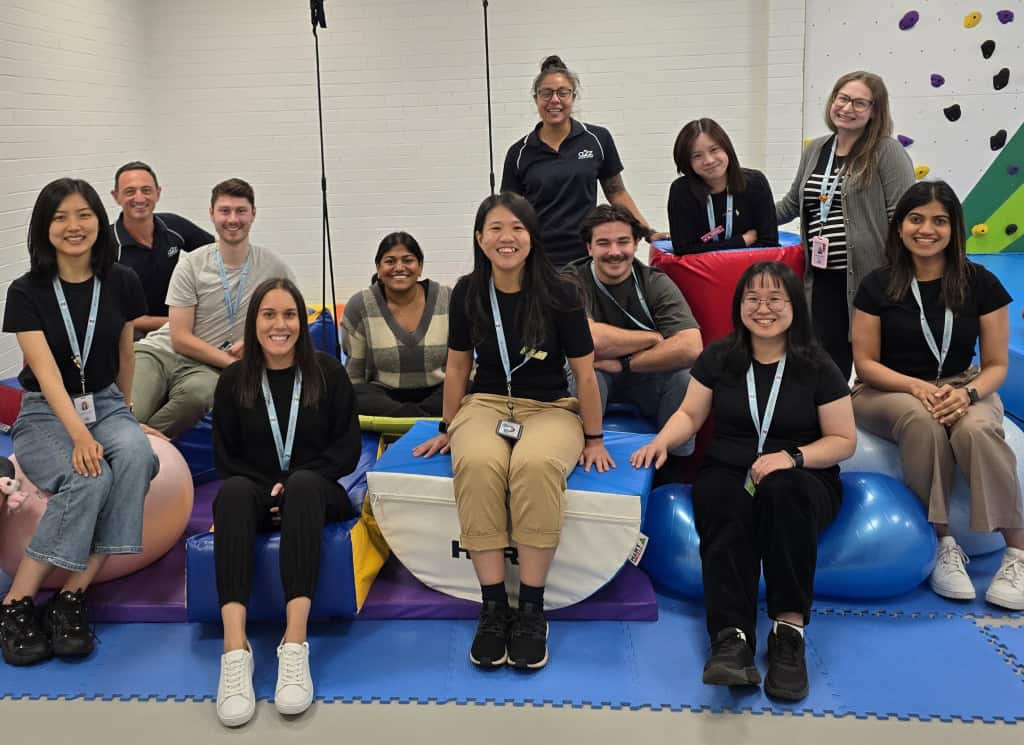

Our team of experienced NDIS registered & approved Physiotherapists and Pilates Instructors are dedicated to providing you with treatment that gets results, whether you are a sports fanatic, weekend warrior or troubled by chronic pain.
Clinical Pilates is a type of physical exercise that puts emphasis on proper body posture, the stability of core and torso, body balance, flexibility, control and body strength. It was developed in the 20th Century by a German known as Joseph Pilates. Today, this method of body fitness is often used alongside physiotherapy to treat various conditions especially neck and back injuries.
Clinical Pilates is different to standard Pilates in that the client is individually assessed by a physiotherapist and then given exercises that specifically target their problem areas. The physiotherapist closely supervises the client’s technique, and grades the exercises so that injuries are prevented. Some physiotherapists may use real time ultrasound feedback in order to help with training the core stability muscles. Most health funds will recognise Clinical Pilates as a physiotherapy intervention, so rebates may apply.
Clinical Pilates is suitable for people that have musculoskeletal pain or injury. It is particularly good if the symptoms are recurrent or chronic, or if there are motor control problems. It can also help with post-surgical strengthening, such as in the lower back, sacroiliac joint, hip, shoulder, and neck. In pre-natal and post-natal women, Clinical Pilates is used to increase pelvic floor strength and control, for prevention and relief of lower back and pelvic pain, and for body reshaping and toning.
People that have postural problems find that Clinical Pilates is helpful as it allows them to develop awareness of their body, as well as increasing their strength and flexibility. Clinical Pilates is also great for people that want to increase their muscle strength, flexibility and tone.
All sessions including initial assessment, follow up consultation and small studio classes are of 30 minutes duration. All Pilates is available for private health care rebate, depending on your cover.
Clinical Pilates is designed as a ‘stepping stone’ for people to return from pain or injury to the gym, or their normal exercise routine. Many people find they enjoy and benefit from Clinical Pilates such that they choose to continue indefinitely. Speak to your physiotherapist for more information about the expected time frame for your recovery.
We have studio classes running Monday to Saturday throughout the day; early and mid morning, early afternoon and early evening. Contact us for times available that will suit you.
Clinical Pilates is based on a theory that demonstrates firm evidence to explain the use of therapeutic exercise to help patients recover from injuries. When a patient is suffering from low back pain for example, clinical Pilates will help the body to retain the deep stabilizing muscles and go a step further to promote flexibility, posture and strength thus alienate the ache.
Though this type of physical exercise can be incredibly beneficial to patients suffering from injuries, it is important to note that the exercise is usually administered to a specific individual. Simply put, clinical Pilates is not a generic tool for everyone who has an injury. It uses carefully selected exercises to identify the primary problem and heal the pain.
This ensures that the patient derives maximum benefits whilst reducing the chances of aggravating the injury. Therefore, if you would like to commence Pilates to alleviate your injury, you should start by visiting a physiotherapist who will assess the suitability of the program for your situation.
A full assessment usually takes about 1 hour to identify any problems or potential problems. This is also time well spent if you are considering joining any class based activity. There are numerous benefits to be gained from performing Clinical Pilates exercises. Some of these include:
Pilates and Yoga can complement each other well yet they are not the same thing nor do they yield the same results. One of the main differences is that clinical Pilates and yoga practice have very different aims. Clinical Pilates is more specifically targeted at rehabilitation from injury, reducing pain and preventing future injury.
In Yoga there is no explicit focus on rehabilitation from injury and Yoga instructors do no receive any specific training for therapeutic work. Yoga is more about greater connection with the body, holding poses, stretching and concentrating on perfecting similar or repeated movements though mind-body awareness.